
Key Takeaways
- Contact lenses sit right on your cornea, so small hygiene slip-ups can lead to infection or irritation.
- Take your lenses out before sleep, naps, and showers.
- Wash and dry your hands, use fresh solution every time, and replace lenses on schedule.
- If you notice redness, pain, or blurry vision, take your lenses out and book a visit.
- Yearly contact lens fittings and eye exams keep your prescription current.
You pop your lenses in every morning without a second thought. That easy routine is part of what makes contacts so handy. Still, a few small shortcuts can add up fast, which is why our team at Dr. Bishop & Associates talks hygiene with every contact lens wearer who walks through the door.
The common contact lens mistakes that put your eyes at risk include sleeping in lenses, letting water touch them, wearing lenses not prescribed for you, and skipping fresh solution or replacement schedules. Our clinic’s contact lens fittings can help you build simple habits that keep your eyes comfortable day after day.
Why Does Contact Lens Hygiene Matter?
Your contact lenses sit right on your cornea, the clear front surface of your eye. Anything on the lens, from a speck of dust to a smear of hand lotion, ends up pressed against it.
Small slip-ups can lead to infection or irritation, including these risks:
- Pink eye can leave your eyes red, itchy, and crusty.
- Scratches can form on the surface of your cornea.
- Corneal ulcers are open sores on the cornea.
Common Contact Lens Mistakes to Skip
A few habits come up again and again, and each one is easy to change once you know about it.
Sleep or Naps in Your Lenses
Dozing off on the couch with your lenses in feels harmless. However, less oxygen reaches your eyes while you sleep, and this can lead to corneal swelling and blurry vision when you wake up.
Take your lenses out before every nap and every bedtime, even the short ones.
Water from Showers, Pools, and Hot Tubs
A quick rinse in the shower or a soak in the hot tub after a day on the slopes seems simple enough. Water from all of these sources can be linked to a serious, painful eye infection.
If you wear daily contact lenses, make sure to remove your lenses after you finish your swim.
Shared or Non-Prescribed Lenses
Each lens is chosen to fit your eyes, so your lenses belong to you alone. Non-prescribed coloured lenses may not fit your eyes properly, which can lead to scratches or infection.
Be especially cautious with novelty or decorative contact lenses featuring bold colours, unusual patterns or designs. Some of these products may not meet Health Canada’s safety requirements and can put your eye health at risk, even if they’re readily available for purchase.
If you love the look of coloured or decorative lenses, our team can help you find a safe, properly fitted option made for your eyes.
Simple Contact Lens Care Habits
Clean, Dry Hands First
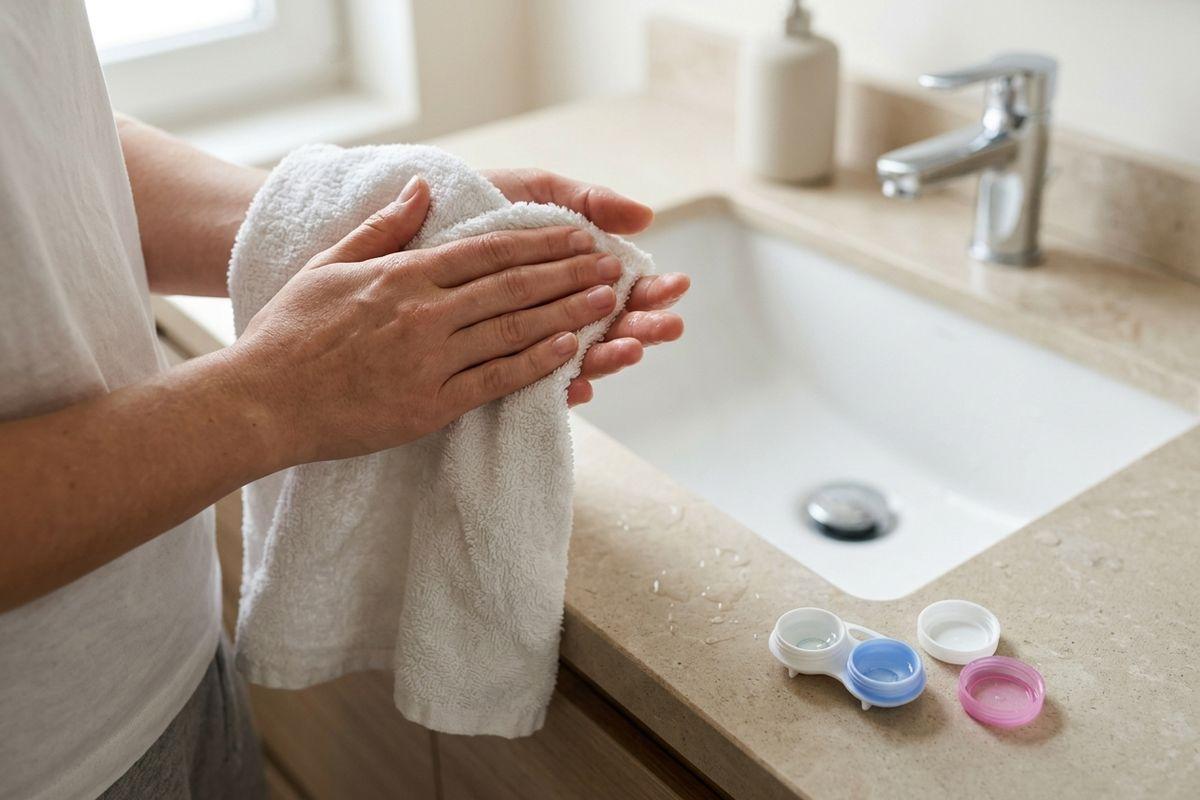
Wash your hands with soap and water, then dry them fully with a clean lint-free towel. Skip hand sanitizer right before you touch your lenses.
Fresh Solution Every Time
Always use fresh contact lens solution each time you store your lenses. Toss the old solution after each use rather than topping it off with a fresh splash. Once your lenses are in, empty your case, rinse it with fresh contact lens solution (never tap water), and let it air-dry upside down.
An easy way to remember to replace your case is to replace it every time you open a new bottle of solution. Many reputable solution brands even include a fresh case with each bottle. If your case becomes dirty or contaminated, replace it rather than relying on a deep clean to make it safe again.

Lenses Replaced on Schedule
Makeup, dust, and tear debris build up on your lenses over time, even with careful cleaning. As deposits accumulate, they can affect how well oxygen passes through the lens, potentially reducing comfort and increasing the risk of irritation.
Some lens materials also have specific performance features that may change with wear. That’s why it’s important not to extend the life of your lenses beyond their recommended replacement schedule. Follow the replacement timeline for your lenses, whether that’s every week or every month.
If cases and solutions feel like a chore, daily disposables can be a good fit. You wear a fresh sterile pair each day and skip cases and solutions altogether.
Signs of a Contact Lens Problem
Your eyes usually let you know when something feels off, so watch for these signs:
- Redness, pain, or swelling
- Blurry vision or light sensitivity
- Itching, burning, tearing, or discharge
Next Steps When Your Eyes Feel Off
If any of these signs appear, follow these steps:
- Take your lenses out and leave them out.
- Store your lenses in their case and bring them to your appointment.
- Visit your optometrist promptly. At Dr. Bishop & Associates, we accept same-day walk-ins
Yearly Contact Lens Fittings and Eye Exams
Contact lens prescriptions have an expiry date. Your yearly visit renews it and gives the optometrist a close look at how your lenses work for you.
During a contact lens fitting, the optometrist checks a few key details:
- How your lenses fit on your eyes
- How well oxygen reaches your eyes
- How many hours a day you wear them comfortably
A full eye exam can also spot changes you can’t see or feel, so small concerns get attention early.
Specialty Lenses for Specific Eye Needs
Some eyes need something different from a standard soft lens. Specialty lenses offer options for keratoconus, corneal scarring, and severe dry eye disease, and they can pair well with dry eye therapy at the clinic.
There are also specialty lenses designed to be worn overnight, gently reshaping the cornea while you sleep so you can enjoy clearer vision during the day without needing glasses or contact lenses. This is called orthokeratology (Ortho-K).
Family Eye Care in Calgary for Contact Lens Wearers
From a teen’s first pair of contacts to a parent’s yearly checkup, Dr. Bishop & Associates offers family eye care in Calgary for all ages. Book your contact lens fitting today and give your eyes a clean, comfortable start.