Key Takeaways
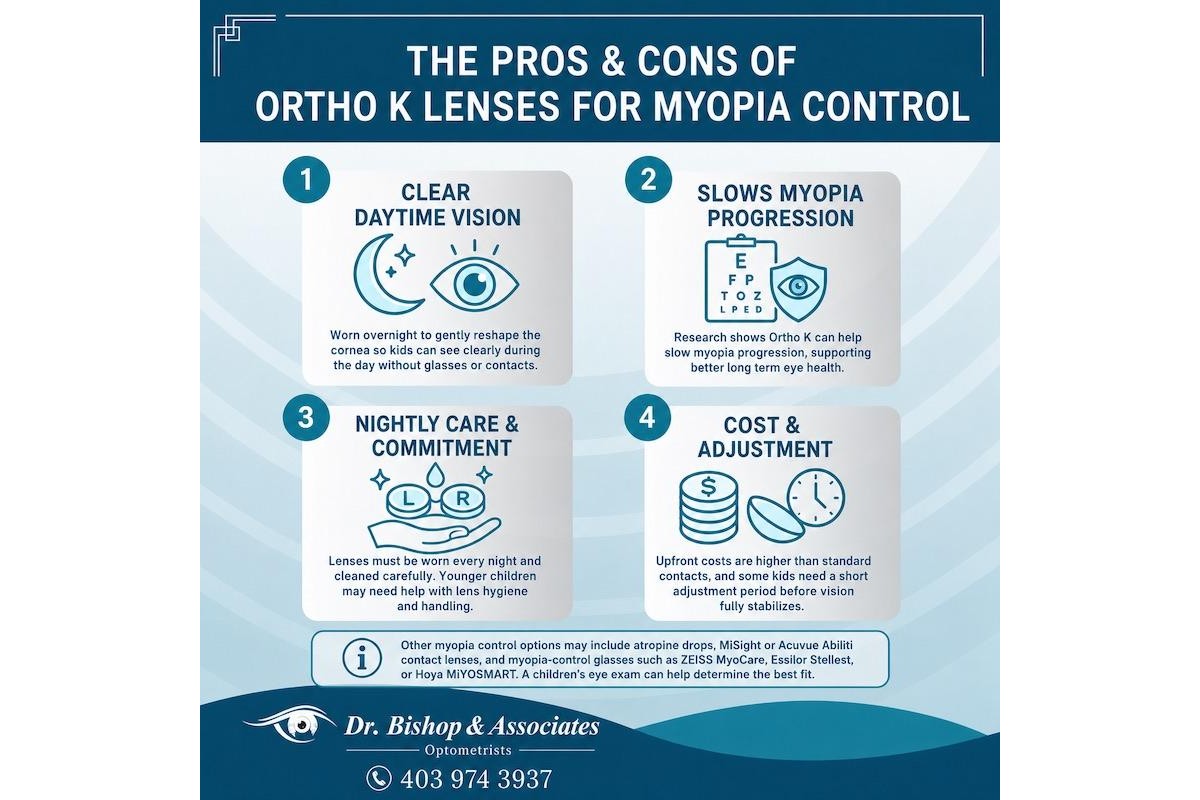
- Ortho-K lenses reshape the cornea overnight so your child sees clearly during the day without glasses or contacts.
- Research shows these lenses can help slow myopia progression in children.
- Ortho-K lenses require nightly wear, careful lens hygiene, and a short adjustment period.
- Ortho-K is one of several myopia management options, including low-dose atropine drops, myopia-control soft contact lenses, and specialized glasses lenses.[a][b]
- A thorough children’s eye exam and contact lens fitting can help determine whether Ortho-K is the right fit for your child.
What Ortho-K Lenses Are and How They Work
Ortho-K lenses are rigid contact lenses worn overnight for myopia control that gently reshape the cornea while your child sleeps. This results in clear, unaided vision during the day. The effect is temporary, so the lenses need to be worn each night to maintain results. Some children can start around age 6, but candidacy depends on their prescription, corneal shape, maturity, and comfort with lens care.
Ortho-K lenses tend to be a popular choice for active kids who find daytime glasses or contacts inconvenient. At Dr. Bishop and Associates, we’ve been helping Calgary families navigate eyewear decisions for over 42 years, and myopia control is one of the areas that our team focuses closely on.
The Real Benefits of Ortho-K for Myopia Management
Clear Vision Without Daytime Correction
One of the most practical advantages of Ortho-K is freedom from daytime correction. Your child can swim, play sports, and go through their school day without worrying about broken glasses or a contact lens falling out on the basketball court. For families managing busy, active schedules, that kind of flexibility makes a noticeable difference.
Myopia Progression & Your Child’s Long-Term Vision
Beyond their daily convenience, Ortho-K lenses have a well-documented role in myopia management. These lenses can help slow how quickly myopia progresses in children.
Higher levels of myopia increase a person’s risk of developing serious eye conditions later in life. Starting myopia management early may help slow progression and reduce the risk of higher myopia later in life.
Global myopia prevalence is projected to reach 52% by 2050, making early intervention more relevant than ever.
The Drawbacks of Ortho-K
Fit, Care, & Commitment
Ortho-K isn’t a hands-off solution. Your child needs to wear the lenses every night. Skipping a night means blurry vision the next day.
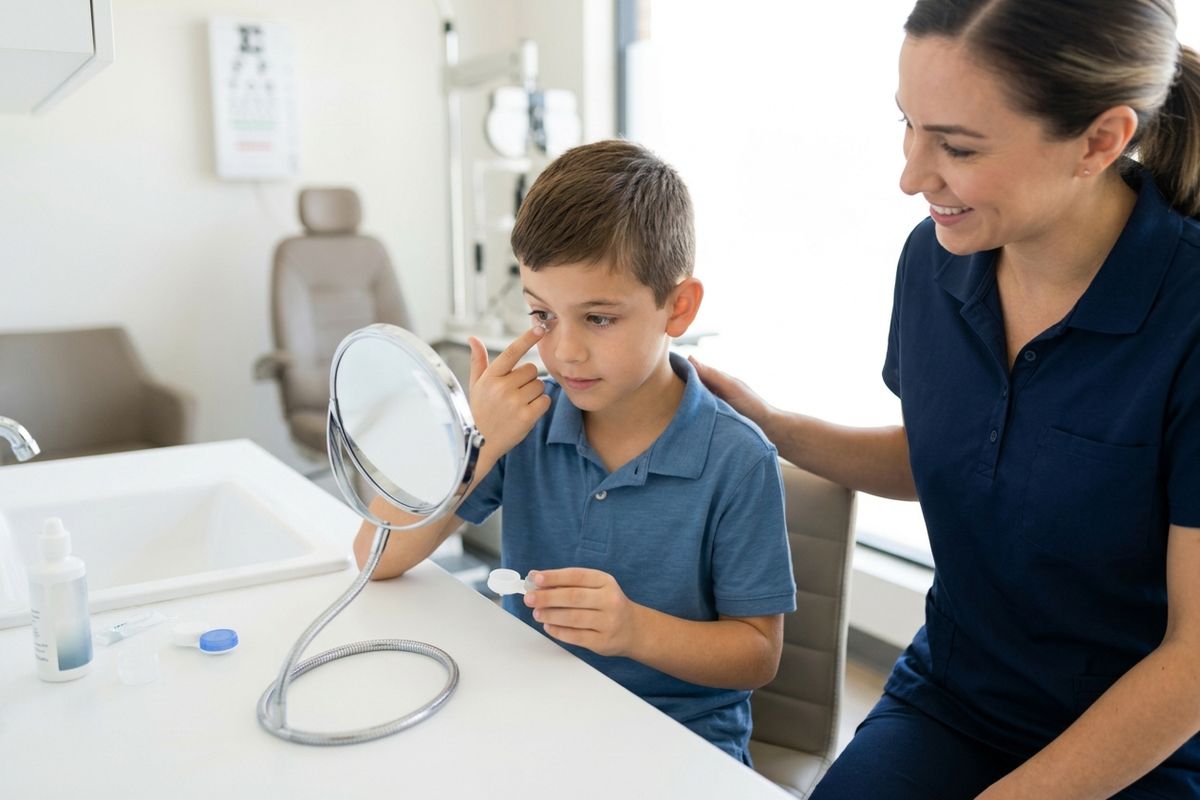
Cleaning, storing, and handling Ortho-K lenses require consistent attention, especially for younger children who may need help from a parent.
Some children adapt quickly. Others find the nightly process tedious after a few weeks. It’s worth having an honest conversation about your child’s habits and willingness to commit before moving forward. Reviewing what to expect when adjusting to contact lenses can help your family feel more prepared before the first fitting.
Cost and Adjustment Period
The upfront cost of Ortho-K lenses is higher than standard soft contact lenses because they are specialized custom lenses that require detailed corneal mapping, fitting, and follow-up care. Most wearers also go through a few weeks of adjustment while their corneas settle into their new shape, so vision may not be perfectly sharp right away. Knowing what to expect from the start can help you manage your child’s transition without frustration. [c][d]
Checking insurance and payment information ahead of time can also help your family plan accordingly.
Ortho-K vs. Other Myopia Control Options
How Ortho-K Fits into Myopia Control
Ortho-K is one approach in a broader toolkit for managing childhood myopia. Other options may include low-dose atropine eye drops, myopia-control soft contact lenses such as MiSight or Acuvue Abiliti, and specialized glasses lenses such as ZEISS MyoCare, Essilor Stellest, or Hoya MiYOSMART. No single method works perfectly for every child, and some children may benefit from a combination plan, but that decision should be guided by their optometrist.
Factors That Should Guide Your Choice
The decision usually comes down to a few key details. Your child’s age, current prescription strength, and daily routine all play a role. So does their comfort level with overnight lens wear. Depending on your child’s eyes and daily routine, your optometrist may also discuss myopia-control glasses lenses, soft contact lens options, or low-dose atropine drops. A thorough children’s eye exam will give your optometrist the information they need to recommend an option for myopia control.
What to Expect From the Fitting & Follow-Up Process
Getting started with Ortho-K begins with a detailed mapping of your child’s corneas. That data helps us determine the shape and size of lens that will fit their eyes. A fitting appointment gives you a chance to ask questions and understand how the lenses work.
Follow-up visits are a regular part of the process. Your child’s optometrist will track how your child’s myopia is changing over time—and recommend adjustments accordingly.
If you’re weighing Ortho-K or another myopia management option for your child, Dr. Bishop & Associates can help you compare the benefits, responsibilities, and fit for your family. Book a children’s eye exam in Calgary today and take a proactive step toward protecting your child’s long-term vision.