Key Takeaways
- Melasma is hormone-linked and tends to appear in symmetrical patches on the face.
- Hyperpigmentation is a broader term for any skin darkening, often tied to inflammation or sun damage.
- Each condition has distinct patterns, locations, and contributing factors.
- Treatments like IPL, radiofrequency, and microneedling can help address both conditions.
- A professional skin assessment can help clarify which condition you have and what to do next.
You notice a patch of darker skin on your cheek or forehead. Maybe it showed up gradually, or maybe it appeared after a breakout. Either way, you want to know what you’re dealing with and what you can do.
Two terms that you might have encountered are melasma and hyperpigmentation. Melasma is a hormone-driven form of skin darkening, while hyperpigmentation is a broader category that covers any skin discolouration caused by excess melanin.
At Beautify @ Dr. Bishop’s, we help Calgary patients sort through skin concerns with professional assessments and non-invasive treatment options, including IPL, radiofrequency, and microneedling through our aesthetic services.
What Melasma and Hyperpigmentation Actually Are
Your skin gets its colour from melanin, a pigment produced by cells called melanocytes. When those cells produce too much melanin in one area, that spot looks darker than the surrounding skin. Both melasma and hyperpigmentation involve this process, but for different reasons.
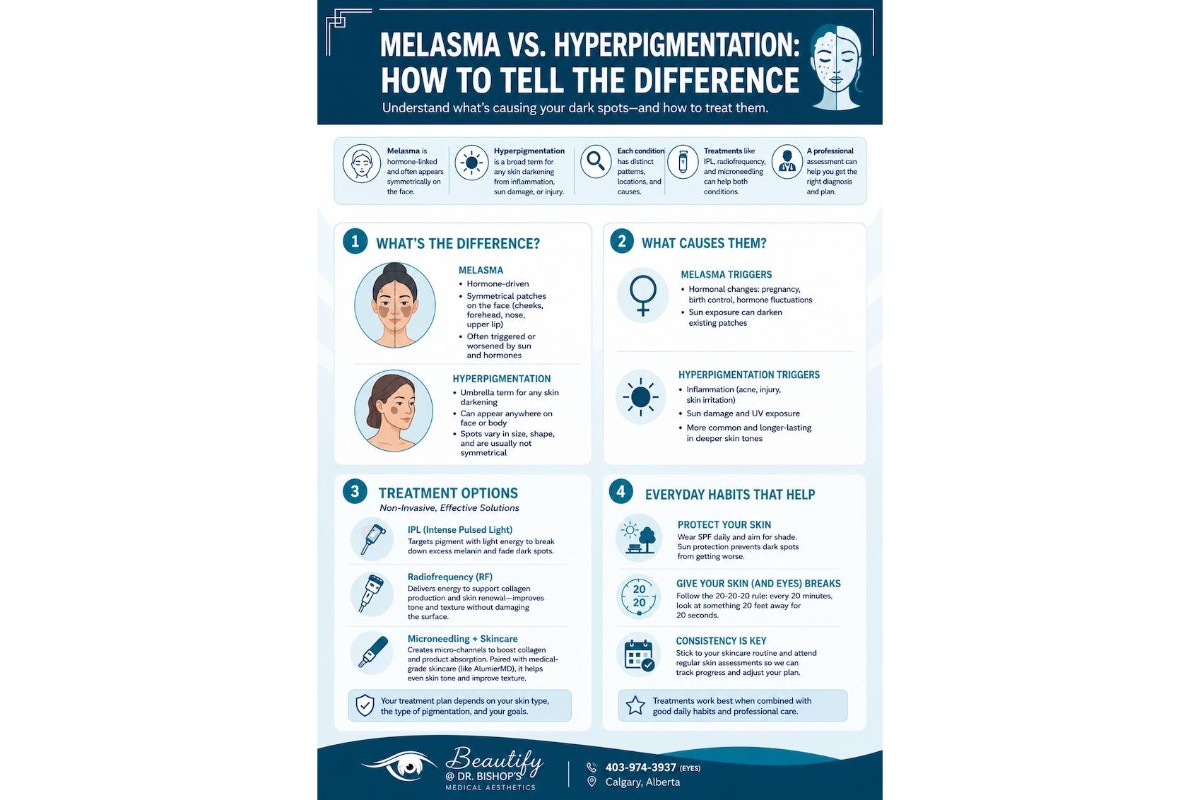
Melasma is specifically tied to hormonal changes. It causes patches of darkened skin that often appear on both sides of the face in a mirrored pattern.
Hyperpigmentation is more of an umbrella term. It covers a range of darkening conditions, including melasma, but also includes spots from sun damage, acne, or skin injury.
Technically, melasma is a type of hyperpigmentation, but not all hyperpigmentation is melasma. It’s also common to have more than one type at the same time, as melasma can occur alongside sun spots or post-inflammatory hyperpigmentation from acne, which can make it harder to tell what you’re dealing with. If you’re also dealing with dark spots from other causes, our guide on dark spots and hyperpigmentation offers a helpful breakdown of what’s behind them and how to approach treatment.
Key Signs That Set Them Apart
Melasma Patterns to Notice
Melasma tends to show up in specific places. You’ll often see it on the cheeks, forehead, bridge of the nose, or upper lip. What makes it stand out is its symmetry. If you notice a patch on one cheek, there’s often a matching patch on the other side.
The patches tend to be larger and more diffuse than other forms of skin darkening. Sun exposure and hormonal shifts can make melasma more visible, which is why many people first notice it during warmer months or after a change in medication.
Hyperpigmentation Patterns to Notice
Hyperpigmentation doesn’t follow the same pattern. It can appear anywhere on the face or body, and the spots tend to vary in size and shape. A dark mark left behind after a pimple heals is one common example. So is a sun spot that forms after years of UV exposure.
Unlike melasma, these spots are usually not symmetrical, and they often appear in isolation rather than as large, blended patches. For a closer look at how to approach these marks, our overview of acne scar treatments walks through several options that can also help with post-inflammatory discolouration.
Common Factors Behind Each Condition
Melasma is closely linked to hormonal changes. Pregnancy, birth control use, and fluctuating hormone levels are frequent contributing factors. Sun exposure doesn’t cause melasma on its own, but it can make existing patches darker and harder to fade. That’s why daily sun protection is one of the most important steps in managing melasma. Even brief UV exposure can trigger or worsen pigmentation, making consistent sunscreen use essential.
Hyperpigmentation has a wider range of contributing factors. Inflammation from acne or a skin injury can lead to post-inflammatory marks. UV damage over time can produce flat, discoloured spots. Your skin tone also plays a role. Deeper skin tones tend to produce more melanin in response to irritation, which can make discolouration more visible and longer-lasting.
Because different skin tones can respond differently to treatment, it’s important to choose procedures and skincare products that are appropriate for your skin type.
Skin Treatment Options Worth Knowing About
IPL and Radiofrequency for Skin Tone
Intense pulsed light, or IPL, targets pigmented areas using light energy. It can help reduce the appearance of discolouration by breaking down excess melanin near the surface of the skin.
Radiofrequency treatments, on the other hand, deliver energy to the skin to support collagen production and gradual renewal without breaking the skin’s surface. You can read more about non-invasive skin tightening treatments to see how radiofrequency fits into a broader skin care plan.
Both options are non-invasive, and the right choice depends on your skin type and the type of discolouration involved. Melasma in particular often requires a more customized treatment approach and ongoing maintenance to help manage future flare-ups.
Microneedling and Skincare Products
Microneedling uses fine needles to create tiny channels in the skin, which can help improve tone and texture over a series of sessions. It’s often paired with targeted skincare products that support gradual pigment correction. Our RF microneedling service page explains how this treatment uses radiofrequency energy alongside the needling process to improve results with minimal downtime.
Consistent use of the right topical products can make a meaningful difference over time. AlumierMD skincare collections, which are available through our clinic, are formulated for a range of skin types, including those prone to discolouration and sensitivity.
When to Talk to a Skin Care Professional
Some skin discolouration fades on its own. But there are times when getting a professional assessment makes sense.
- A patch changes quickly in size, colour, or texture
- Over-the-counter products haven’t produced any visible change after several weeks
- You’re not sure whether what you’re seeing is melasma, hyperpigmentation, or something else entirely
- You want a treatment plan tailored to your skin tone and specific type of discolouration
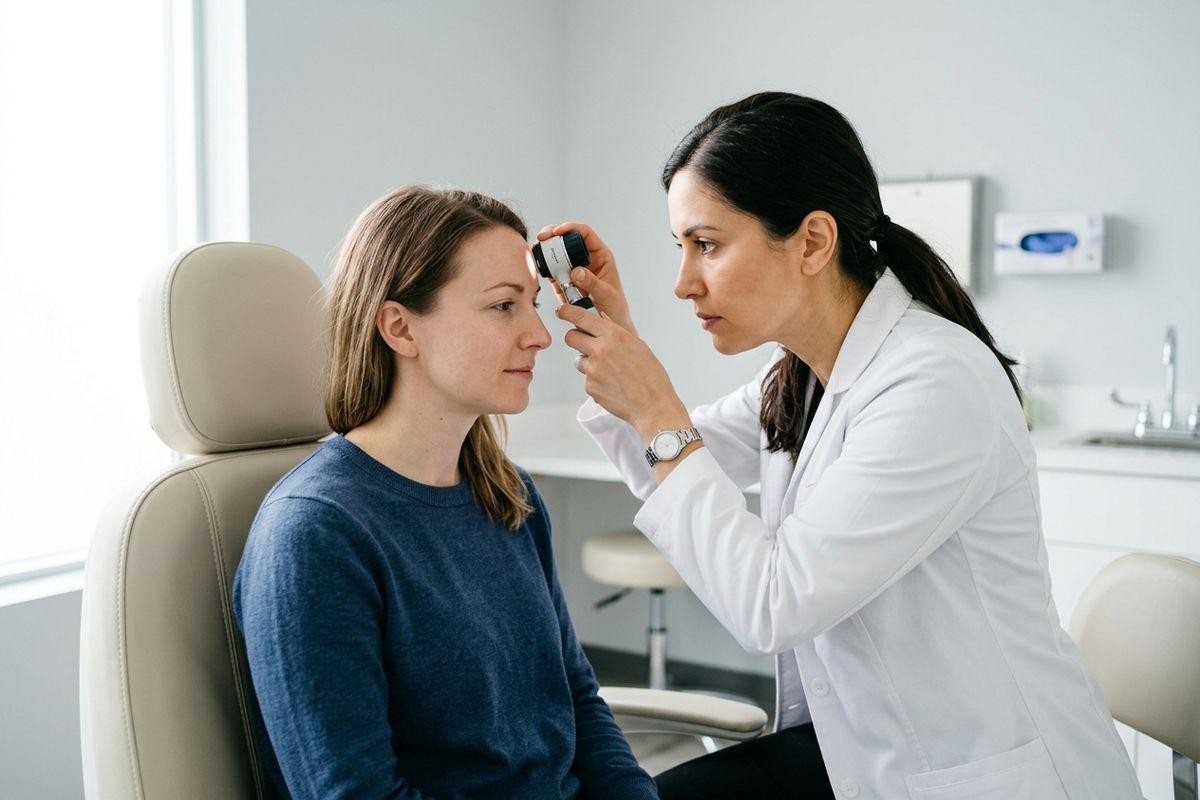
Guessing which product or treatment to try can lead to frustration and, sometimes, to more irritation. A professional assessment can offer a clearer starting point.
Beautify @ Dr. Bishop’s offers skin treatments including IPL, radiofrequency, and microneedling to help address discolouration and support healthier-looking skin. If you’re ready to take a closer look at what’s going on with your skin, contact our team at any of our four Calgary locations to book a consultation.
Daily sun protection is one of the most important steps in managing melasma. Even brief UV exposure can trigger or worsen pigmentation, making consistent sunscreen use essential