Key Takeaways
- Screens can lead to temporary strain, not lasting structural harm to healthy eyes.
- Reduced blinking during screen time leaves eyes dry, scratchy, and tired.
- Heavy screen use may play a role in how quickly myopia progresses in children.
- The 20-20-20 rule, better lighting, and hydration can reduce daily discomfort.
- Regular eye exams help catch vision changes and eye disease early.
What Screens Actually Do to Your Eyes
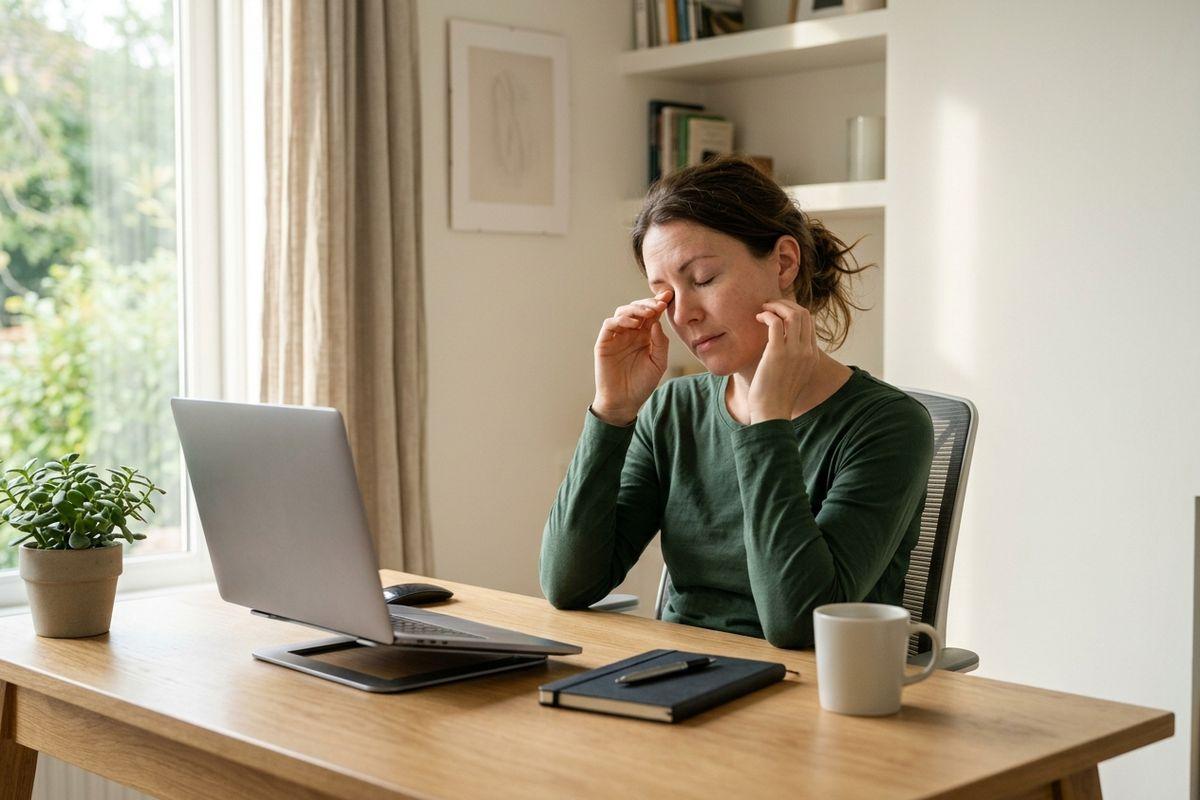
You’ve probably felt it after a long workday. Your eyes ache, the screen looks a little fuzzy, and you just want to rest. That tired feeling is real, but it usually points to temporary eye strain rather than lasting harm.
Screens do not cause permanent eye damage in healthy eyes. However, they can leave you with temporary discomfort until you rest and give your eyes a break. This is partly because we blink less while we’re focusing. Less blinking means that your eyes replenish less moisture, which can leave them feeling dry and gritty.
Our team at Dr. Bishop and Associates can help you find ways to reduce digital eye strain and boost your visual comfort.
Signs of Digital Eye Strain to Watch For
Digital eye strain builds up over the day. Watch for these common signs:
- Tired, dry, or scratchy eyes after screen time
- Blurry vision that clears once you look away
- Headaches around your forehead or temples
- Neck and shoulder tension from leaning toward the screen
These symptoms tend to ease with rest. If they stick around day after day, you’re probably working your eyes too hard.
When Symptoms Point to Dry Eye
Symptoms like burning, redness, and a feeling like sand in your eyes can all signal dry eye rather than eye strain.
Dry eye therapy in Calgary focuses on the root causes of your discomfort. Our team can look at how well your tears are forming and suggest options like non-invasive IPL or radiofrequency treatments to help you find longer lasting relief.
Screens and Children’s Vision
Kids spend more hours than ever looking at close-up screens, and that matters for their growing eyes. Long stretches of near work, paired with less time outdoors, have been linked to faster myopia progression in children.
Myopia, or nearsightedness, is when distant objects look blurry. Once myopia starts, it often continues to progress as a child grows. Myopia management is a proactive way to slow this progression using tools like specialty lenses and eye drops.
Simple Ways to Protect Your Eyes
Adopting a few good habits can make screen time easier on your eyes.
- Follow the 20-20-20 rule. Every 20 minutes, look at something 20 feet away for 20 seconds to relax your focusing muscles.
- Adjust your lighting and screen distance. Keep your screen about an arm’s length away and minimize glare from windows or overhead lights.
- Blink often and drink water throughout the day. This helps keep your eyes moist and comfortable.
Eyewear Made for Screen Time
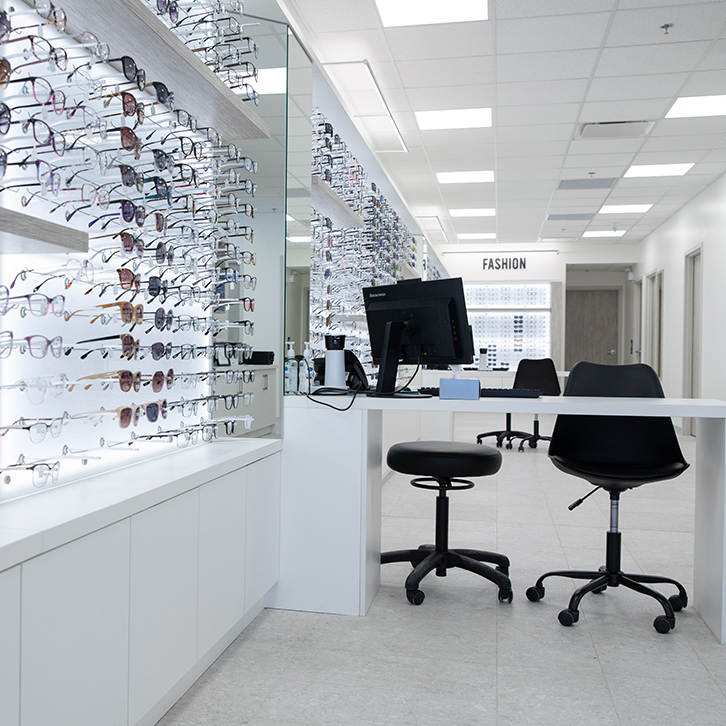
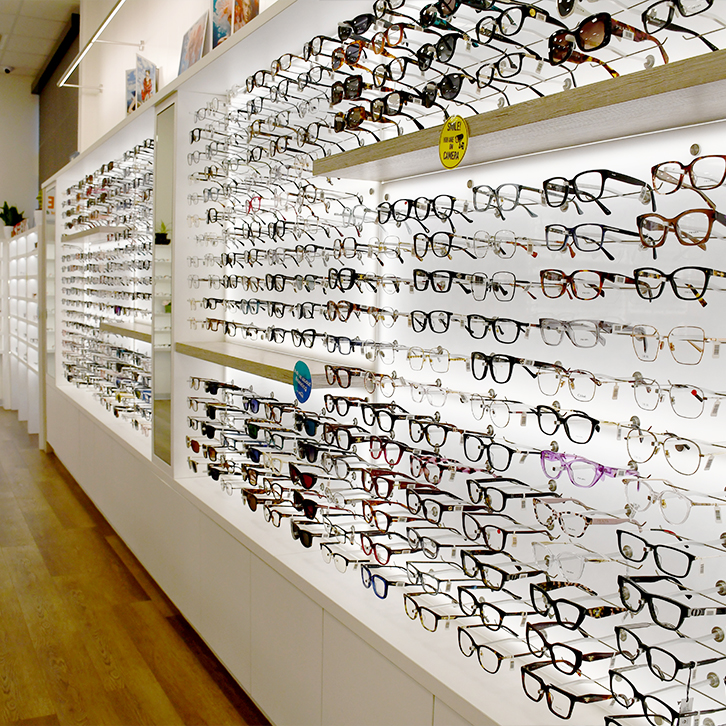
The right glasses can take pressure off your eyes during long work sessions. Screen-friendly lenses help reduce glare and support your ability to focus, so that you finish the day with less fatigue.
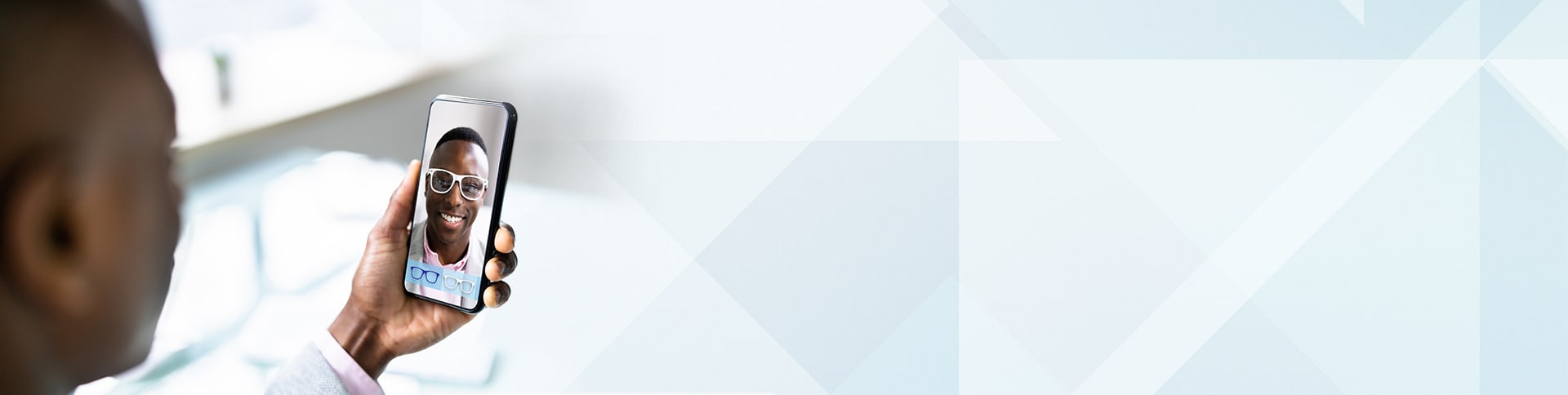
Virtual try-on glasses let you see how different styles look from your own couch, so you can narrow down favourites before you visit and pick eyewear that fits your face and your day.
When to Book an Eye Exam
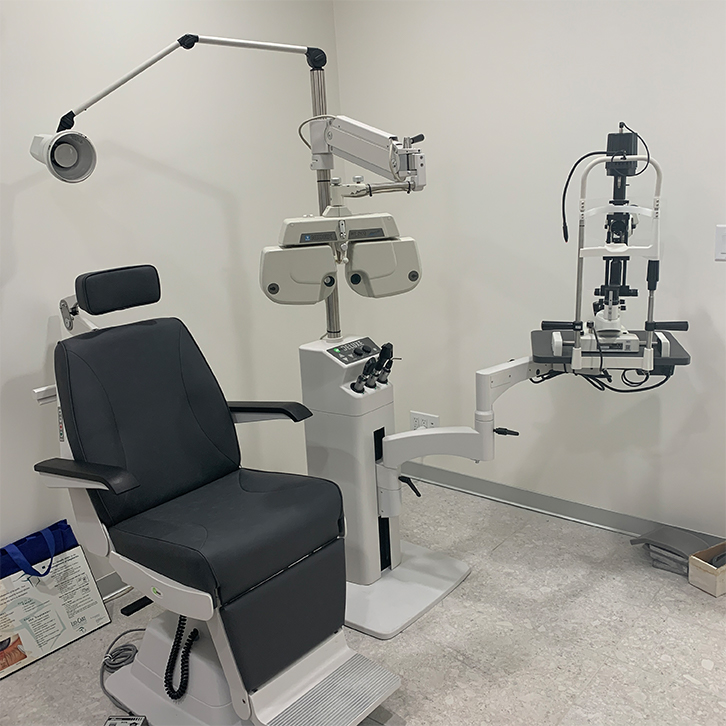
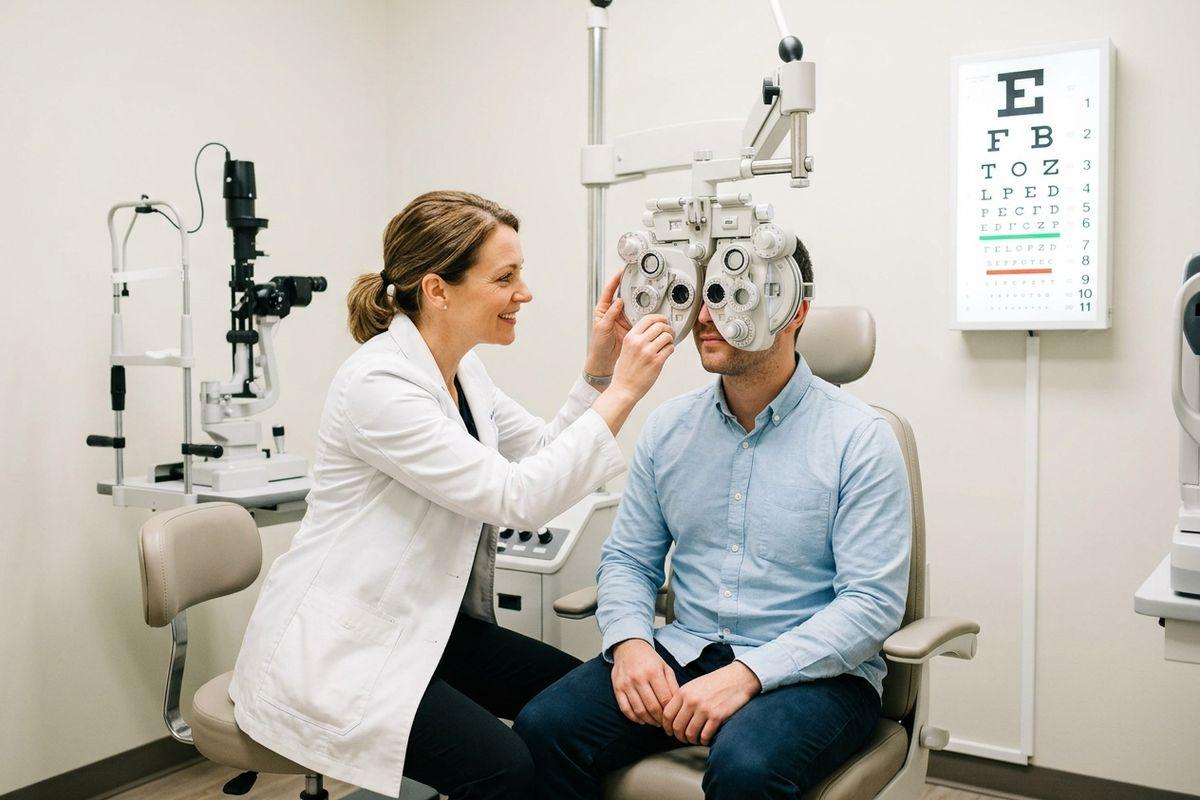
Eye strain that lingers is worth a closer look. If your eyes stay tired, your vision keeps getting blurry, or headaches follow you from screen to screen, an eye exam can help you understand what’s going on.
Routine checkups do more than update your prescription. They help our team catch early signs of eye disease, including glaucoma and cataracts, often before you notice changes yourself.
At Dr. Bishop and Associates, we’ve supported Calgary families for over 42 years with thorough eye exams, dry eye therapy, myopia management, and eyewear that fits your life. Book your eye exam today and give your eyes the care they deserve.