


You might notice words on a page becoming harder to read, or faces starting to look blurry in the center of your vision. These changes often signal macular degeneration—a condition where the central part of your retina gradually breaks down. While you can’t stop all cases of this age-related eye condition, you have more control than you might think.
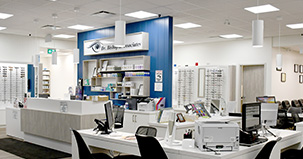
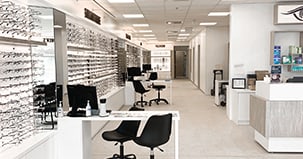
You can reduce your risk of macular degeneration through specific lifestyle choices, protective habits, and regular eye exams that catch early changes before they affect your daily life. Dr. Bishop & Associates helps Calgary families understand their macular health risks and develop personalized prevention strategies through comprehensive eye care.
What Is Macular Degeneration?
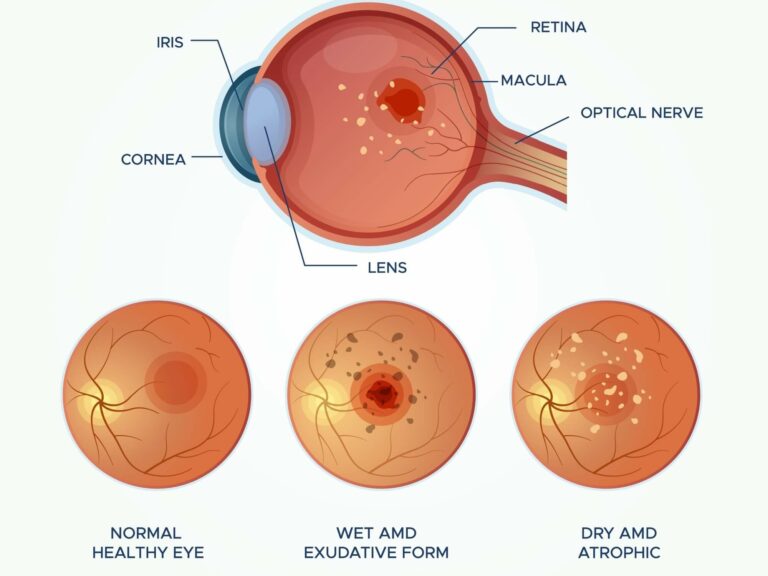
Macular degeneration happens when the macula—the central part of your retina responsible for sharp, detailed vision—starts to deteriorate with age. You may first notice problems with tasks that require clear central vision, like reading, driving, or recognizing faces.
The condition shows up in two main forms. Dry macular degeneration develops slowly as waste deposits build up under your retina, while wet macular degeneration occurs when abnormal blood vessels leak fluid into your macula. You might experience:
- Blurred or fuzzy central vision
- Dark or blank spots in the center of your sight
- Straight lines that appear wavy or bent
- Colours that seem less bright or vivid
Risk Factors You Can’t Change and Those You Can Control
Fixed Risk Factors
Some aspects of macular degeneration risk remain beyond your control. Age plays the biggest role. Your chances increase significantly after 50, with most cases developing after 60. If your parents or siblings had macular degeneration, your genetic makeup puts you at higher risk, too.
Your eye colour and overall genetic background also influence your likelihood of developing this condition. Light-colored eyes and certain genetic variations make some people more susceptible than others.
Controllable Risk Factors
The good news is that several major risk factors respond to your daily choices. Smoking largely increases your risk of macular degeneration by reducing blood flow to your eyes and increasing harmful oxidation.
Your diet directly affects your eye health through the nutrients that reach your retina. Poor nutrition, especially diets low in antioxidants and healthy fats, leaves your macula more vulnerable to damage. Unprotected sun exposure over many years can also contribute to retinal deterioration.
Nutrition and Lifestyle Changes That Support Eye Health
Foods That Help Your Macula
Certain nutrients act like natural sunscreen for your retina. Leafy greens such as spinach, kale, and collard greens contain lutein and zeaxanthin—compounds that concentrate in your macula and filter harmful light.[a]
Fish like salmon, mackerel, and sardines provide omega-3 fatty acids that support healthy blood vessels in your eyes. Colourful fruits and vegetables, such as oranges, berries, peppers, and carrots, deliver antioxidants that help protect your retinal cells from damage.
[b]
Daily Habits for Prevention
Regular physical activity improves blood circulation to your eyes and helps maintain a healthy weight. Excess weight increases inflammation throughout your body, including in your eyes, which can speed up macular degeneration.
Quality sunglasses that block 100% of UV rays protect your retina from cumulative sun damage. Look for wraparound styles that also shield your eyes from side angles.
Early Detection Through Regular Eye Exams
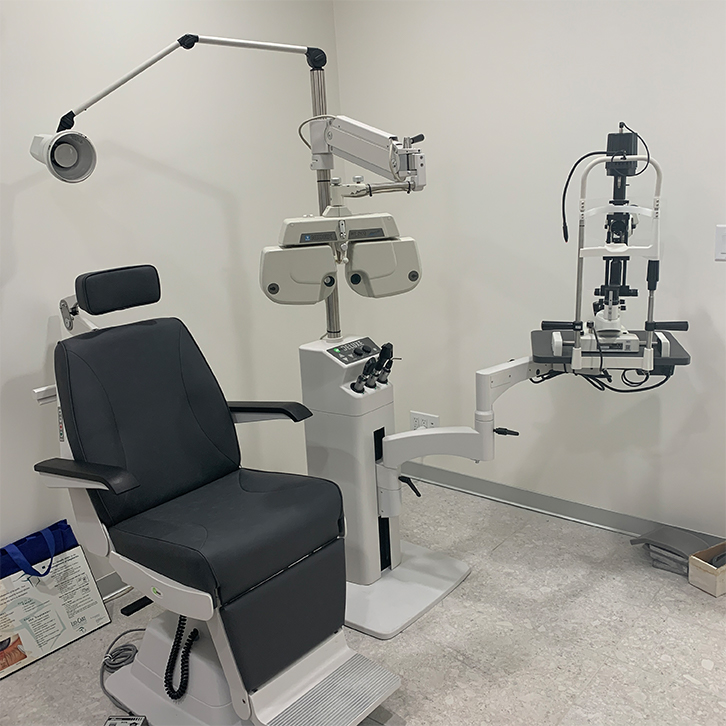
Comprehensive eye exams can spot macular changes years before you notice vision problems. During these exams, eye care professionals use specialized imaging to photograph your retina and detect early signs of deterioration.
Modern diagnostic tools, such as optical coherence tomography, create detailed cross-sections of your macula, revealing tiny changes that are invisible during regular vision tests. These thorough screenings include comprehensive macular health assessments as part of routine eye care.
Early detection matters because treatments work better when started promptly. You can also begin protective lifestyle changes immediately once you know your risk level.
Treatment Options
For dry macular degeneration, specific vitamin supplements containing zinc[c], vitamins C and E, lutein, and zeaxanthin can slow progression in certain cases. These supplements work when your diet alone doesn’t provide enough protective nutrients.[d]
Wet macular degeneration requires more intensive treatment, typically through injections that block the growth of abnormal blood vessels. These treatments can stabilize your vision and sometimes even improve it when started early.
Long-Term Vision Management
Regular monitoring helps track any changes in your condition and adjust treatments as needed. Your eye care team can recommend low-vision aids, such as magnifying glasses, special lighting, or digital tools, to help you maintain independence.
Many people with macular degeneration continue enjoying their favourite activities with the right support and adaptive strategies. For those dealing with severe vision changes, low-vision management provides helpful strategies and tools.
Protect Your Vision
Dr. Bishop & Associates provides comprehensive screening and management for macular degeneration as part of our family-focused eye care services. Our experienced team uses diagnostic technology to detect early changes and create personalized prevention plans for Calgary families.
Schedule your comprehensive eye exam today to assess your macular health and learn specific steps you can take to protect your vision for years to come.
[a]remove Blue just put harmful light, some people act weird about blue light blocking etc.
[b]This is not Macular degeneration
[c]Zinc has actually been removed from most as it was linked to a death in one study
[d]Zeaxanthin and Lutein are carotinoids and there actually has been another one discovered which is about 8 times more potent call Mesozeazanthin